// Real work. Not renderings.
FROM THE FLOOR
Client B-L
Years of losses → Break-even in 3 monthsBuilding products manufacturer. No standard work, no flow, no visual management. Assembly chaos with parts in cardboard boxes on the floor. Restarted a machine that had been down 8 years. Designed aluminum extrusion workstations with organized parts presentation and ergonomic tooling.
Before
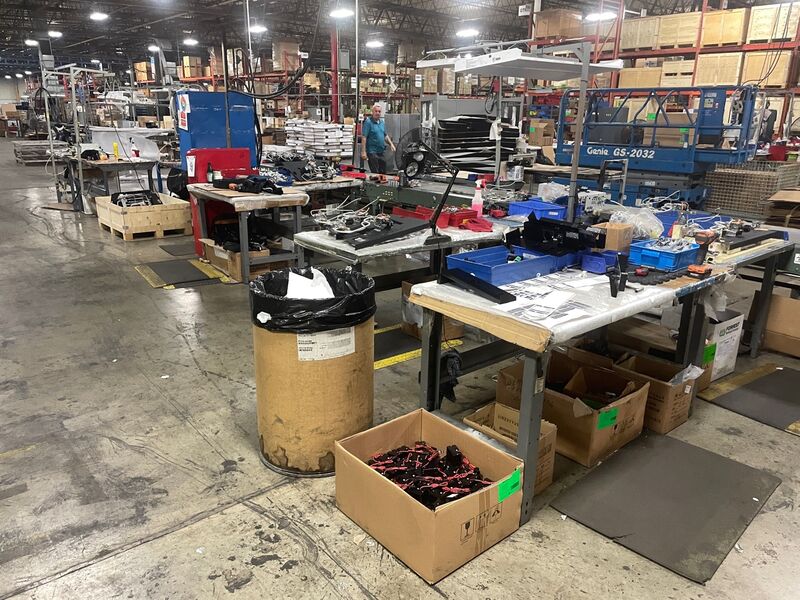
Assembly area. Parts in cardboard on the floor. No flow. No standard work. No visual management.
After
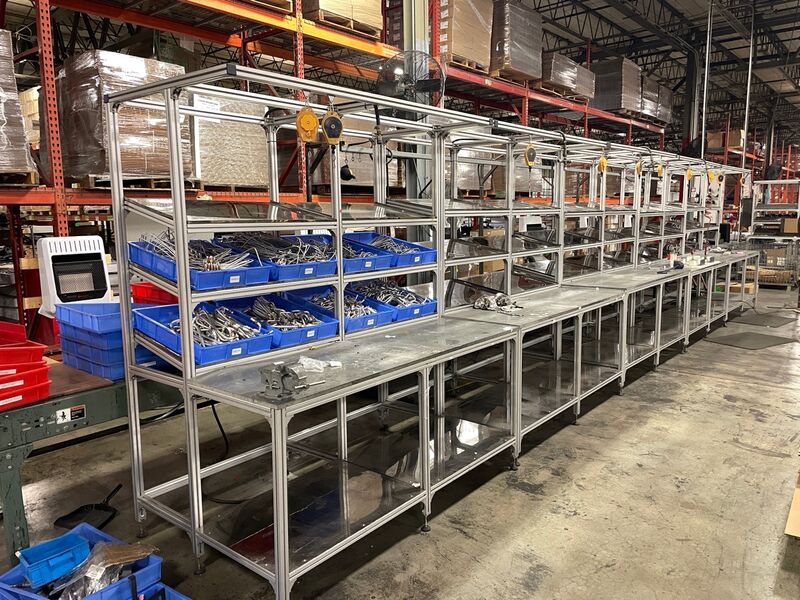
Same area. Aluminum extrusion workstation. Labeled bins. Spring balancers. Every part has a home.
Client T
4% → 93.9% OEE in 15 monthsFamily-owned steel tube manufacturer. First outside operator in company history. Built OEE monitoring, jidoka culture, and a custom $39K inline inspection system (74% below industry standard). Hired and developed the quality manager and maintenance manager from scratch.
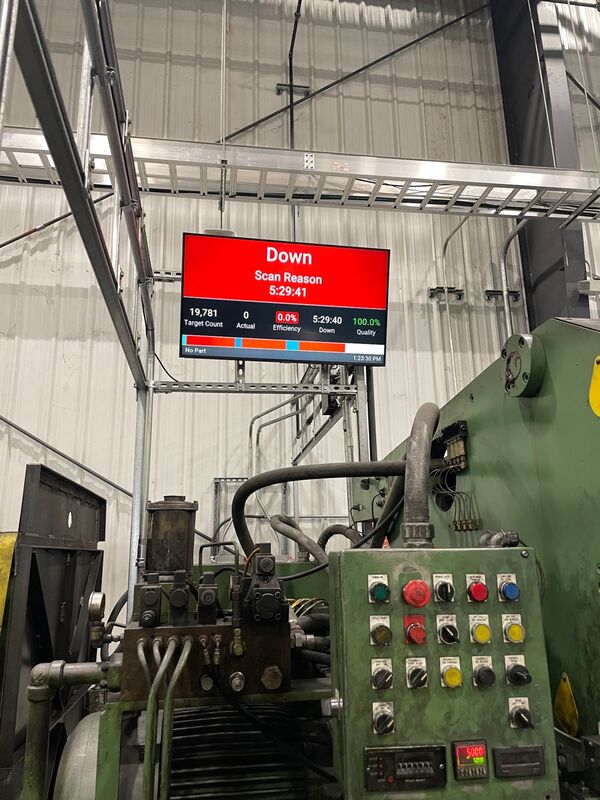
Vorne XL HD — DOWN. Red screen. 0 actual. 5:29 downtime. 19,781 target. This is what the truth looks like when you first turn the lights on.
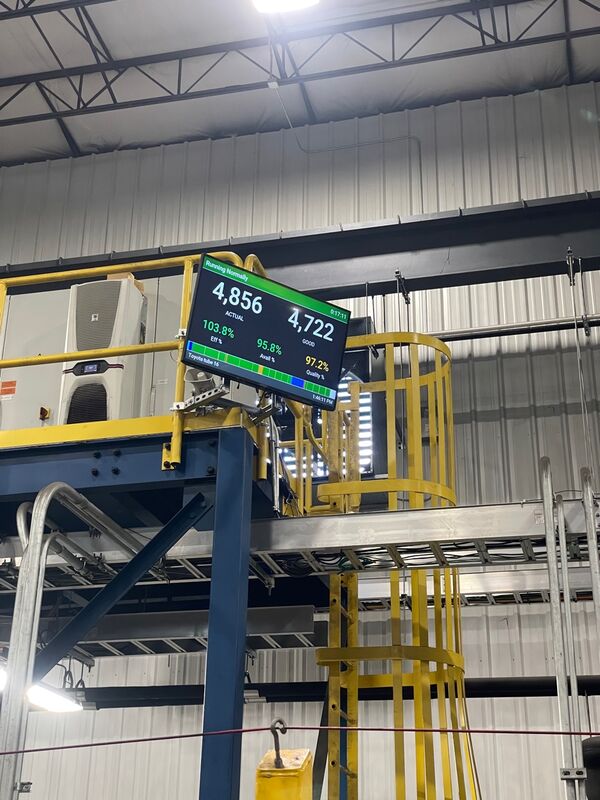
Vorne XL HD — RUNNING. Line 16. 4,856 actual. 103.8% efficiency. 95.8% availability. 97.2% quality. Same plant.
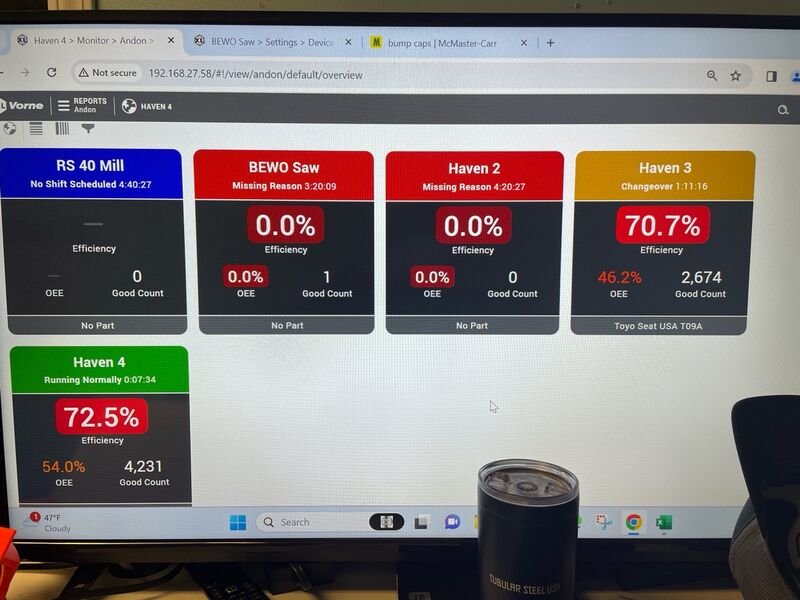
Plant-wide andon. All machines at a glance. RS 40 Mill, BEWO Saw, Haven 2–4. Running customer parts. Real-time visibility.
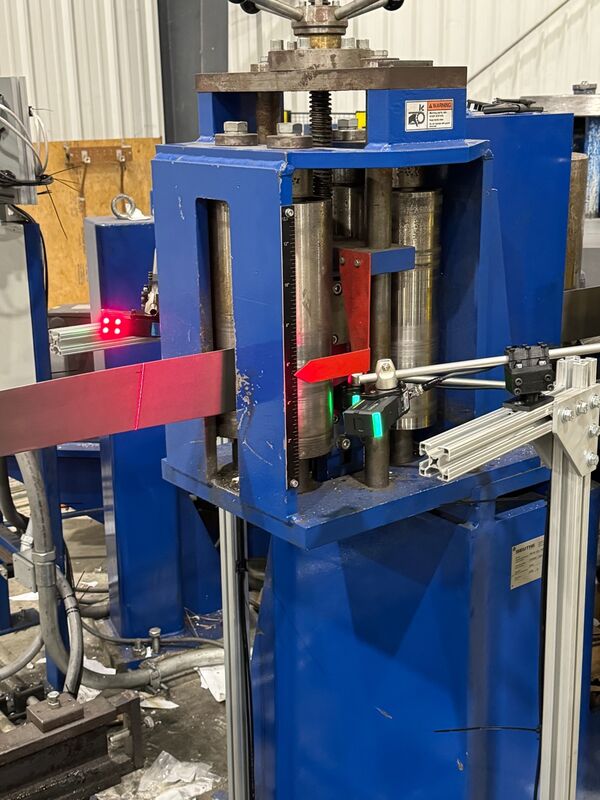
Custom inline inspection. Keyence laser sensors measuring coil thickness & width at 300m/min. My concept, $39K build vs $150K off-the-shelf. Jidoka — catch it at the source.
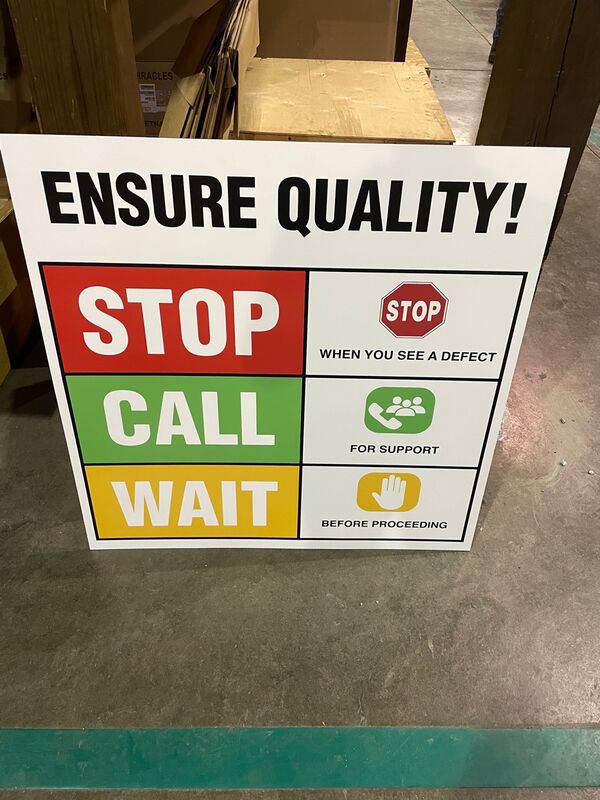
Stop–Call–Wait. I created this at a plant that had never had quality culture. STOP when you see a defect. CALL for support. WAIT before proceeding. Pure TPS.
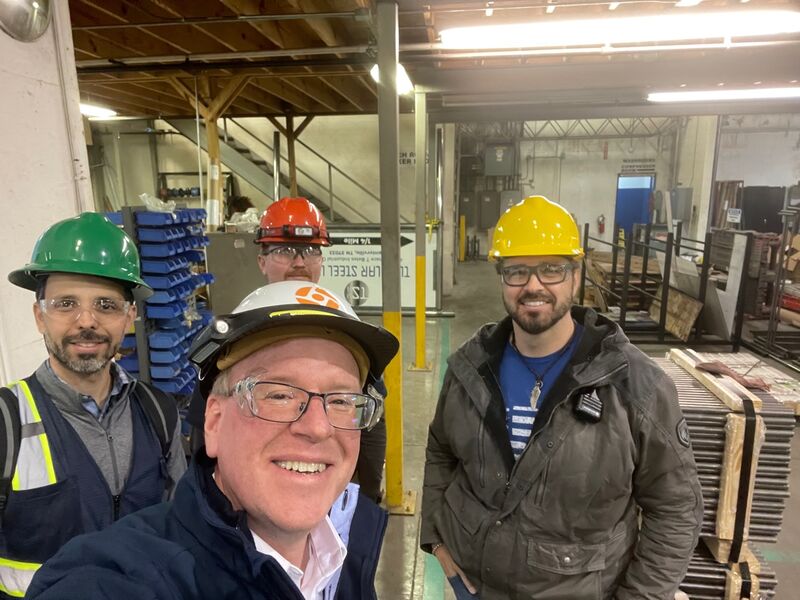
The team I built. Daniel (green, visiting customer — a Tier-1 seating supplier). Royce (yellow, quality manager I hired). Chase (orange, maintenance manager — came in as a TCAT student in 2016, now runs maintenance).
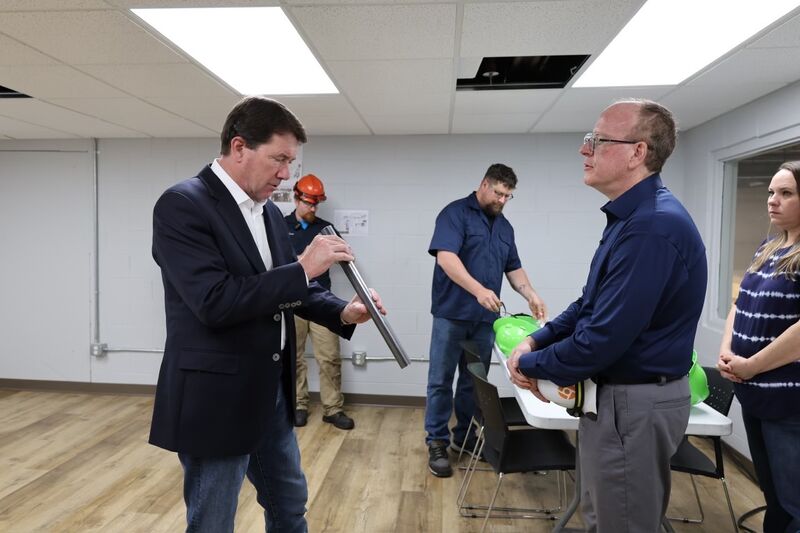
U.S. Senator Bill Hagerty visits. His office chose us for a Go and See workforce visit. The link: he served as U.S. Ambassador to Japan, I spent 11 years at Toyota in Japan. His team thought that connection was worth seeing firsthand.
Client M-S-J
2% → 98% First Time Quality in 3 weeksTurned the client's failing Japan operation into their most profitable global unit. Applied the real Toyota Production System — not the textbook version — to transform quality and throughput.
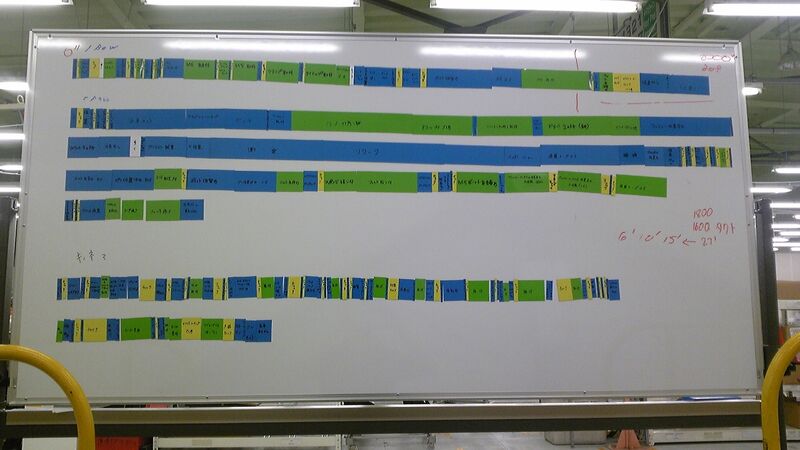
山積み表 — Yamazumi board. Color-coded work elements mapping human and machine cycle time. All in Japanese. This is how Toyota actually designs production lines. I read it, I write it, I teach it.